There’s no script for your career
May 21, 2013
Last week I discussed the concept of implying too much precision in a business model. I also see a similar…


Last week I discussed the concept of implying too much precision in a business model. I also see a similar…

To be great the modern CEO must have tremendous influence over their organizations while in some sense seeming to do…

The sixth and final hat in this series is one I am adding to Jim Schleckser’s work on The High…
Your Optimism Might Be Stifling Your Team
This is a great article in Harvard Business Review about how unbridled optimism can be detrimental to employees. Especially for a CEO, being too optimistic can make employees think you don’t understand their challenges, you are being dishonest, and/or that you don’t have a grasp on reality. I covered the drawbacks of a CEO who is too optimistic in my Cheerleader CEO Fail post.
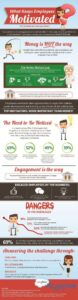
Here is an interesting infographic Salesforce.com published on its blog about How to Motivate Your Employees, with the main message that money is not the top motivator. This is a topic I’ll keep covering along with employee engagement, because they are integral to ensuring high performance in companies. Late last year I discussed Daniel Pink’s outstanding TED presentation on The Puzzle of Motivation, which goes into more detail about how intrinsic motivators are more effective than extrinsic ones. I highly recommend his book also: Drive: The Surprising Truth about What Motivates Us

http://www.texasenterprise.utexas.edu/article/how-ceos-social-life-affects-company-performance
The answer is yes, and it’s more than anecdotal. Texas Enterprise shares the business and public policy knowledge created at The University of Texas at Austin and published an article recently detailing the research of assistant professor Cesare Fracassi, who studies executives’ social networks. He recently finished a nine-year study comparing the social ties between 30,860 executives at 2,059 companies to decisions those companies made, especially investment patterns. His conclusion in a nutshell:
“There is evidence that suggests that where the CEO and directors are more socially involved, the company is more profitable,” Fracassi says. “The information they receive helps the company to make the right decisions.”
Read the full article at TexasEnterprise.com